Xtreme
Firmware
Feature-rich, stable, customizable
X
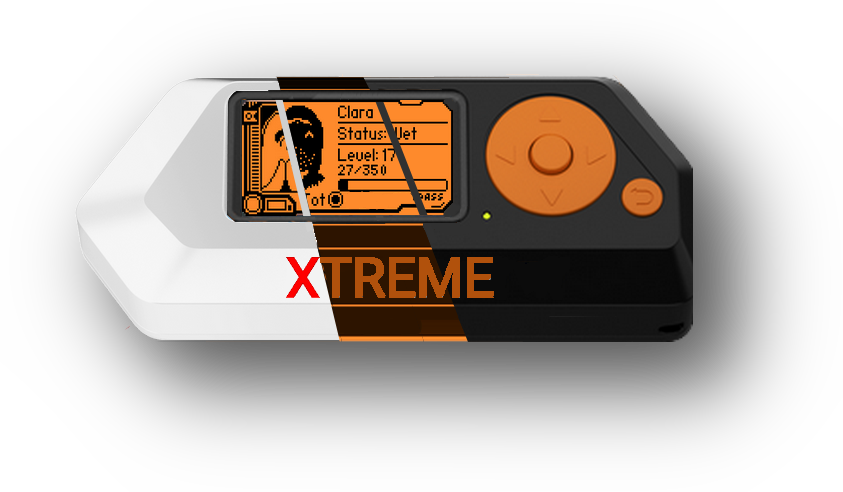
We include basically all apps in this custom firmware, as long as they work. We also have an extensive reservoir of features, both custom-made based on suggestions, and the things you love from elsewhere.
We spent many hours rewriting most core parts of our custom firmware, as well as some of its apps and addons to ensure stability. A needed task that has been ignored everywhere else, so we tackled it right away.
Want to change the animations, turn on/off some icons, change your flipper's name, level or mood? You can. All that, without needing to mess with code, as its all done right on the device with a convenient app.
The background actors, the crowds, and the primary cast shared a native understanding of the setting's customs, posture, and emotional expressions, giving the Arabic version an unmatched layer of realism. The Power of English Subtitles for Modern Audiences
If watching on digital platforms like YouTube, click the "CC" icon and navigate to settings to select English subtitles, as they may not turn on automatically.
[Camera Setup] ➔ Filming English Cast (Scene A) ➔ Reset ➔ Filming Arabic Cast (Scene A)
The Message meticulously charts the early days of Islam in Mecca, the persecution of early Muslims, the migration ( Hijra ) to Medina, and the eventual triumphant return to Mecca.
For an English-speaking viewer, the are the bridge to understanding this masterpiece. However, not all subtitles are created equal. The keyword implies a search for quality. the message arabic version english subtitles
The Arabic version, titled , was filmed simultaneously with the English production on the same sets but with a different cast of prominent Arab actors, such as Abdullah Gaith and Muna Wassef .
. This version aimed at intercivilizational diplomacy, using more generalist narration and shared moral values to bridge cultural gaps. Historical and Theological Authenticity
Abdullah Gaith's portrayal of Hamza is often lauded for its emotional depth and commanding presence, considered by many to be as powerful as, if not more than, Anthony Quinn's.
Many viewers find the Arabic version more immersive because the Quranic verses and traditional greetings are delivered in their original linguistic form, maintaining the poetic and rhythmic power of the dialogue. Plot and Historical Context The background actors, the crowds, and the primary
Starred Anthony Quinn as Hamza and Irene Papas as Hind, designed for Western audiences.
One of the most fascinating aspects of the production was the decision by director Moustapha Akkad to shoot the film twice.
Following Islamic tradition, Prophet Muhammad is never shown or heard. This rule also applied to his wives, daughters, and the four Caliphs. 👥 Cast Comparison
If you can find it, and if you can watch it with English subtitles that do justice to the original dialogue, do not hesitate. Ignore the shorter, more convenient English cut. Set aside the version that saved a few minutes of runtime. Watch Ar-Risālah . Hear the Arabic. Read the English. And see the film as Akkad always meant it to be seen: not as a translation, but as the message itself. For an English-speaking viewer, the are the bridge
The Message is more than a historical drama; it is a bridge between cultures. While the English version introduced the history of Islam to the Western world, the Arabic version with English subtitles offers the truest, most authentic vision of Moustapha Akkad’s dream. It allows global audiences to look past the Hollywood lens and experience an epic story told by the very people whose heritage it represents. Whether you are a film buff, a history enthusiast, or a language student, seeking out this specific version is a highly rewarding cinematic journey.
Because of its educational and cultural value, various cultural institutions and authorized distributors have uploaded the film with hardcoded or closed-captioned English subtitles on video-sharing platforms.
Watching the film this way is a study tool. You hear the authentic pronunciation of names like Khaled ibn al-Walid and Bilal ibn Rabah while reading the English. It reinforces the historical narrative of the Hijra (migration to Medina) and the battles of Badr and Uhud.
While the English version succeeded in introducing Western audiences to the foundational history of Islam, the Arabic version resonates with a raw, spiritual, and artistic intensity that the English production simply could not replicate. 1. Linguistic Majesty and the Power of Fusha
Dont just take our word for all this. While we take great pride in our work on this Firmware,
its always better to get some un-biased opinions. So, go ahead and have a look at some of those videos instead
Need some help? Have a feature to suggest? Just wanna chat? Come join us!